
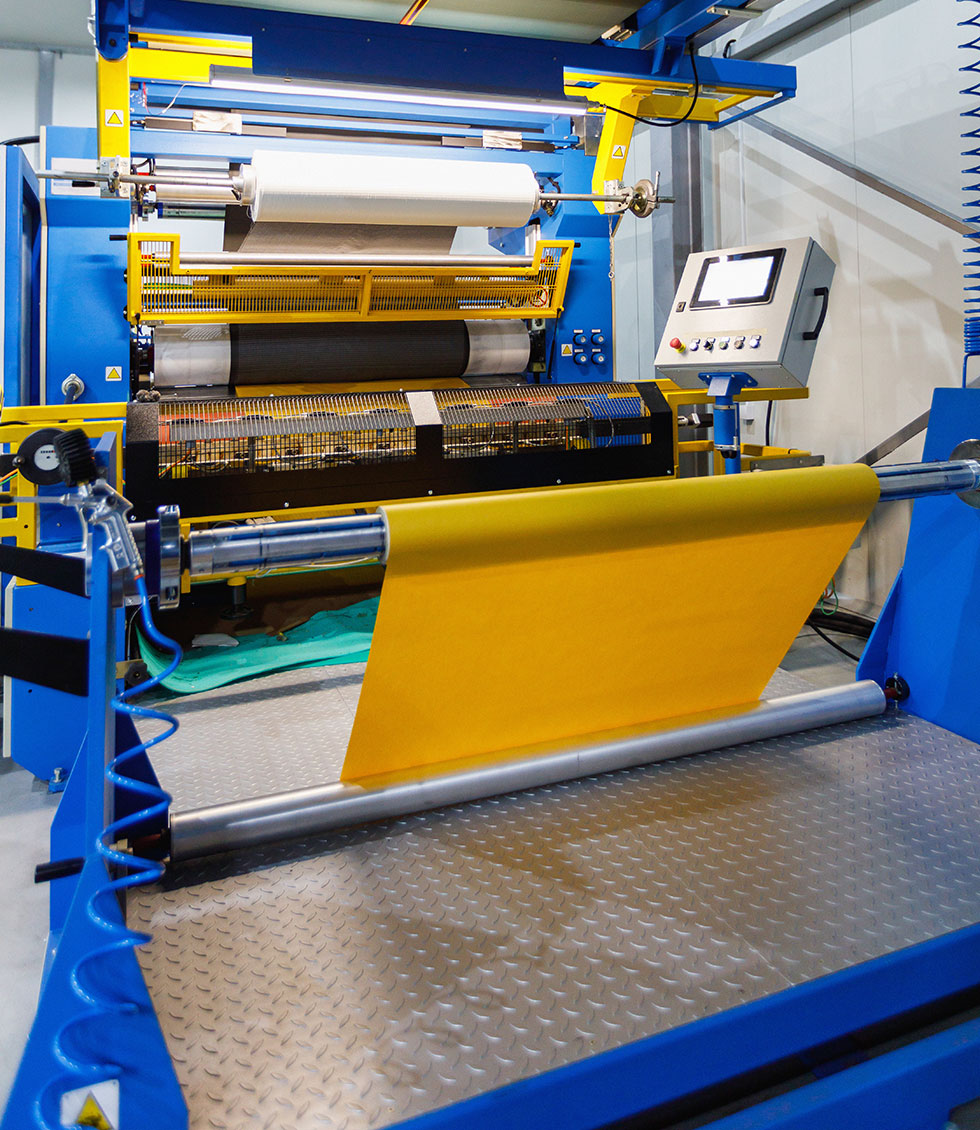
Rubber Roller Recoating
Rubber roller recoating restores performance by replacing the existing rubber covering with a new material matched to your application.
Over time, the rubber on a roller can wear beyond usable limits, harden, crack, or lose the properties required for consistent performance. Recoating addresses these issues by removing the existing covering and applying a new rubber compound built for your process conditions.
When Recoating Makes Sense
Recoating is often the right approach when:
- The rubber covering is worn, damaged, or no longer performing
- There is cracking, hardening, or material degradation
- The roller requires a different material for improved performance
- The core is still in good condition and can be reused
Replacing the covering allows you to restore performance without the cost or lead time of a completely new roller.
- Roller grinding for surface correction and dimensional accuracy
- Core repair if there is damage to the shaft or internal structure
Restore Performance with the Right Material
If your roller covering is worn or no longer meeting performance requirements, recoating provides a practical path to restore function and extend service life.